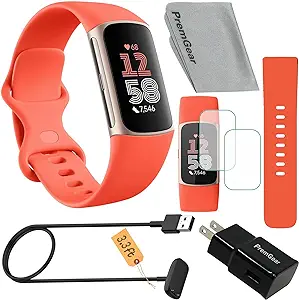
Fitbit Charge 6 vs inspire 3, When it comes to selecting a fitness tracker, the Fitbit Charge 6 is a prominent contender. This comparison will help you understand how it stacks up against the FITVII Ole Fitness Tracker. Both devices offer unique features and benefits, catering to different user needs and preferences.
The battery life of a fitness tracker is essential for those who want their device to last throughout the week without frequent charging. The FITVII Ole offers 7 to 10 days on a single charge, giving users more confidence in its longevity. Meanwhile, the Fitbit Charge 6 provides a solid 5 to 7 days of battery life, which is still convenient for most users.
Price is another critical factor in choosing a fitness tracker. The FITVII Ole is budget-friendly at $39.99, offering a wide range of features like an AMOLED HD display, heart rate and blood pressure monitoring, and over 100 sport modes. On the other hand, the Fitbit Charge 6, priced at $144.90, includes advanced features such as real-time heart rate tracking, an ECG app, and Google Maps and Wallet integration. These premium features justify the higher price for those who need them.
Battery Life Comparison: Fitbit Charge 6 vs FITVII Ole Fitness Tracker
Credit - www.amazon.com
Battery life is a key factor when choosing a fitness tracker. The FITVII Ole Fitness Tracker offers between 7 to 10 days of battery life on a single charge, depending on usage. This range gives users confidence that their device will last through the week without needing frequent recharges.
In comparison, the Fitbit Charge 6 provides a solid battery life as well, though it tends to last around 5 to 7 days on a full charge. While this is slightly less than the FITVII Ole, it still allows for nearly a week's use, making it convenient for most users.
FITVII Ole Fitness Tracker, 1.6'' AMOLED Fitness Watch
Comparing the Price-to-Value Ratio of Fitbit Charge 6 and FITVII Ole Fitness Tracker
The FITVII Ole Fitness Tracker comes in at a budget-friendly price of $39.99. Despite its lower cost, it offers a range of features including a 1.6-inch AMOLED HD display, heart rate and blood pressure monitoring, blood oxygen and sleep tracking, and over 100+ sport modes. For those looking for a cost-effective fitness tracker, the FITVII Ole provides substantial value.
On the other hand, the Fitbit Charge 6 is priced at $144.90, which is significantly higher than the FITVII Ole. However, it includes advanced features such as real-time heart rate tracking on compatible exercise machines, ECG app for heart rhythm irregularities, and Google Maps and Wallet integration. These premium features justify the higher price tag but may not be necessary for all users.
FITVII Ole Fitness Tracker, 1.6'' AMOLED Fitness Watch
Fitbit Charge 6 vs FITVII Ole: User Interface Comparison
Credit - www.amazon.com
Navigating through the Fitbit Charge 6 is a seamless experience, thanks to its intuitive touch screen and straightforward layout. The menus are well-organized, making it easy for users to access different functions without any hassle. On the other hand, the FITVII Ole also boasts a user-friendly interface with its 1.6-inch AMOLED color screen, providing bright and clear visuals. However, some users have reported that the menu system can be slightly more complex to navigate compared to the Fitbit Charge 6.
The Fitbit Charge 6 offers a high degree of customization with various watch faces and widgets that can be easily added or removed. Users can quickly get to their preferred features and stats, which enhances the overall user experience. While the FITVII Ole also provides a range of customization options, including different watch faces and a variety of smart features, it requires a bit more effort to set up and navigate through these options.
Customer Support and Warranty Comparison: Fitbit Charge 6 vs FITVII Ole Fitness Tracker
Customer support can make or break a product experience. Fitbit is well-known for its extensive support network, offering multiple contact methods such as phone, email, and live chat. Their support team is available 24/7, ensuring users can get help whenever they need it. On the other hand, FITVII offers basic support through email and their website. While their support is generally responsive, it doesn't match the round-the-clock availability that Fitbit provides.
When it comes to warranty, Fitbit stands out with its one-year limited warranty that covers defects in materials and workmanship. They also offer a 45-day money-back guarantee if you're not satisfied with the product. FITVII provides a similar one-year warranty, but without the money-back guarantee. This makes Fitbit a more appealing option for those who want peace of mind with their purchase.
Third-Party App Integration: Fitbit Charge 6 vs. FITVII Ole Fitness Tracker
Credit - www.amazon.com
The Fitbit Charge 6 offers excellent third-party app integration, making it a versatile choice for fitness enthusiasts. It connects effortlessly with Google Fit and Apple Health, allowing users to sync their data across multiple platforms. This feature ensures that all your health and fitness information is consolidated in one place, providing a comprehensive view of your progress. Additionally, the Fitbit Charge 6 supports apps like Strava and MyFitnessPal, enhancing its functionality for those who use various fitness and nutrition applications.
On the other hand, the FITVII Ole Fitness Tracker has limited third-party app integration. While it can connect to its proprietary app for basic data tracking, it does not offer seamless integration with popular apps like Google Fit or Apple Health. This limitation might be a drawback for users who prefer to have all their fitness data centralized in one app. However, the FITVII Ole does provide essential tracking features within its app, which might be sufficient for users looking for basic health monitoring.
Build Quality and Durability Comparison: Fitbit Charge 6 vs. FITVII Ole Fitness Tracker
The Fitbit Charge 6 stands out with its robust design and high-quality materials. The device features a sleek aluminum body, which not only adds to its aesthetic appeal but also ensures long-lasting durability. The bands are comfortable and interchangeable, allowing users to switch them out depending on their activity or style preferences. Additionally, the screen is protected by a layer of Gorilla Glass, which is known for its resistance to scratches and minor impacts.
On the other hand, the FITVII Ole Fitness Tracker also offers a sturdy build with its lightweight metal body and AMOLED HD display. Although it may not match the premium feel of the Fitbit Charge 6, it still provides a reliable and durable option for everyday use. The FITVII tracker is IP68 waterproof, meaning it can withstand dust, dirt, and submersion in water up to a certain depth, making it suitable for various activities and environments.
The FITVII Ole Fitness Tracker and the Fitbit Charge 6 both offer a range of health tracking features, but they differ in their capabilities. The FITVII Ole focuses on providing a broad set of health data, including heart rate, blood pressure, and blood oxygen levels. This makes it an excellent choice for users who want a comprehensive overview of their health metrics.
On the other hand, the Fitbit Charge 6 offers more advanced health tracking tools. It includes an ECG app to detect heart rhythm irregularities and an EDA sensor to monitor stress levels. These features provide a deeper insight into your health, making the Fitbit Charge 6 a better option for those who need detailed health monitoring.
When it comes to fitness tracking, both devices are equipped with multiple sport modes. The FITVII Ole offers over 100 sport modes, catering to a wide variety of activities. Meanwhile, the Fitbit Charge 6 supports over 40 exercise modes but adds real-time heart rate tracking with compatible exercise machines, enhancing the fitness tracking experience.
The FITVII Ole and Fitbit Charge 6 also differ in their smart features. The FITVII Ole allows for manual time and date setting, call and message notifications, and music control. In contrast, the Fitbit Charge 6 goes a step further by integrating Google Maps for navigation and Google Wallet for contactless payments, offering more convenience for daily use.
Battery life is another area where these trackers differ. The FITVII Ole offers up to 7-10 days of battery life on a single charge, depending on usage. The Fitbit Charge 6, while not specified in the detailed data, typically offers up to 7 days of battery life, which is consistent with other Fitbit models. Both provide sufficient battery life for extended use, but the FITVII Ole may offer a slight edge in longevity.
In terms of overall value, the FITVII Ole is priced at $39.99, making it a budget-friendly option with a wide range of features. The Fitbit Charge 6, priced at $144.90, offers more advanced health tracking and smart features, justifying its higher price for those who need these capabilities.
FITVII Ole Fitness Tracker, 1.6'' AMOLED Fitness Watch
The FITVII Ole Fitness Tracker features a 1.6-inch AMOLED HD display that is both bright and vibrant. This ensures that users can easily view their fitness data even in direct sunlight. The screen's high resolution and sharp visuals make it easy to read notifications and track metrics without straining the eyes.
The Fitbit Charge 6, on the other hand, offers a display that is known for its clarity and brightness. Its screen adapts well to various lighting conditions, making it easy to read indoors or outdoors. Whether under the sun or in a dimly lit room, the display remains visible, providing a consistent user experience.
FITVII Ole Fitness Tracker, 1.6'' AMOLED Fitness Watch
Customization Options Comparison: Fitbit Charge 6 vs. FITVII Ole Fitness Tracker
Credit - www.amazon.com
Customization options play a significant role in personalizing your fitness tracker experience. The Fitbit Charge 6 offers a variety of watch faces and bands, allowing users to switch up their look easily. With multiple color bands available and the ability to change the watch face from the app, users can match their tracker to their style.
On the other hand, the FITVII Ole Fitness Tracker also provides customization options, but they are somewhat limited compared to the Fitbit Charge 6. Users can choose from different watch faces and have some band options, but the variety is not as extensive. However, it still offers enough customization to keep most users satisfied.
Comparing Water Resistance: Fitbit Charge 6 vs. FITVII Ole Fitness Tracker
Water resistance is an important feature for fitness trackers, especially for those who engage in water-based activities or want to ensure their device can handle occasional splashes. The Fitbit Charge 6 offers a water resistance rating of up to 50 meters, making it suitable for swimming and other water-related exercises. This means you can wear it in the shower, pool, or even during a swim in the ocean without worrying about water damage.
On the other hand, the FITVII Ole Fitness Tracker boasts an IP68 waterproof rating. This rating indicates that the device is protected against dust and can withstand being submerged in water up to a depth of 1.5 meters for 30 minutes. While this is sufficient for everyday use and activities like swimming in a pool, it might not be as robust as the water resistance offered by the Fitbit Charge 6.
Final Conclusion: Fitbit Charge 6 vs FITVII Ole Fitness Tracker
In this conclusion, we summarize the key points of the comparison and declare the Fitbit Charge 6 as the preferred choice based on the following reasons: While both devices offer solid features, the Fitbit Charge 6 stands out with its advanced health tracking tools like the ECG app and EDA sensor, better third-party app integration, and a more user-friendly interface. Additionally, the Fitbit provides a higher level of customization and a robust support network. This decision aligns with the thematic concept of comprehensive health monitoring, emphasizing the importance of detailed health insights and user convenience.
Questions & Answers:
Question: How long does the battery last on the FITVII Ole Fitness Tracker?
Answer: The FITVII Ole Fitness Tracker offers between 7 to 10 days of battery life on a single charge, depending on usage.
Question: What is the price difference between the Fitbit Charge 6 and the FITVII Ole Fitness Tracker?
Answer: The FITVII Ole Fitness Tracker is priced at $39.99, while the Fitbit Charge 6 costs $144.90.
Question: Which fitness tracker offers better third-party app integration?
Answer: The Fitbit Charge 6 offers better third-party app integration, supporting apps like Google Fit, Apple Health, Strava, and MyFitnessPal. The FITVII Ole has limited third-party app integration.
Question: What are the main health tracking features of the FITVII Ole and Fitbit Charge 6?
Answer: The FITVII Ole tracks heart rate, blood pressure, and blood oxygen levels. The Fitbit Charge 6 includes an ECG app for heart rhythm irregularities and an EDA sensor for stress monitoring.
Question: How does the customer support for Fitbit and FITVII compare?
Answer: Fitbit offers extensive 24/7 support through phone, email, and live chat. FITVII provides basic support through email and their website.
Question: Which fitness tracker has a better display for outdoor use?
Answer: Both the FITVII Ole and Fitbit Charge 6 have bright displays suitable for outdoor use. The FITVII Ole features a 1.6-inch AMOLED HD display, while the Fitbit Charge 6 has a clear and bright screen.
Question: Can you swim with the Fitbit Charge 6 and FITVII Ole?
Answer: Yes, both trackers are water-resistant. The Fitbit Charge 6 is water-resistant up to 50 meters, while the FITVII Ole has an IP68 rating, meaning it can be submerged up to 1.5 meters for 30 minutes.
Question: What customization options are available for the Fitbit Charge 6 and FITVII Ole?
Answer: The Fitbit Charge 6 offers various watch faces and interchangeable bands. The FITVII Ole also provides different watch faces and some band options, but the variety is more limited.